
Milwaukee Riverkeeper: a Crucial Asset in Milwaukee
by Christopher Hayden
Bridge the City Producer, Deisy España, sat down with Jennifer Bolger Breceda, executive director of Milwaukee Riverkeeper. Among other topics, they discussed the organization's goals, how Milwaukeeans can get involved, the issue of road salt, and the upcoming Annual Cleanup.
Milwaukee Riverkeeper is a science-based and community-led nonprofit dedicated to protecting the health of the Milwaukee River Basin waterways. Its primary vision is a future in which everyone can enjoy healthy local water resources.
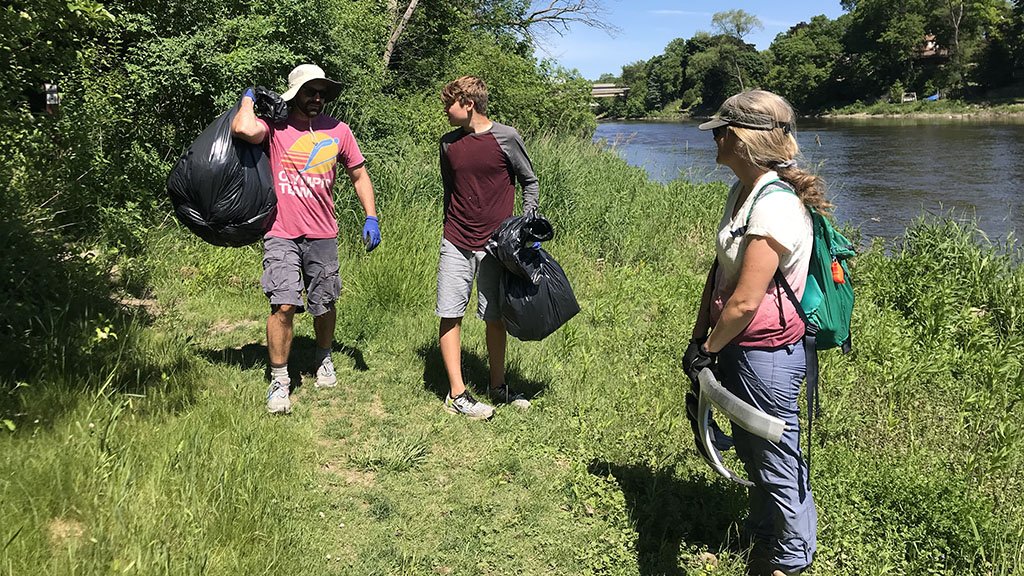
The Apr. 25 Annual Cleanup exemplifies these goals. According to Breceda, between 4,500 and 125,000 volunteers have participated annually to remove over 100,000 pounds of trash from the Milwaukee River watershed. Both seasoned volunteers and first-timers are encouraged to join.
“From that, we’ve created an Adopt-A-River program for people and groups and communities that wanna clean up the river all year,” Breceda added. “And so we can support those clean-ups throughout the summer and fall months.”
Milwaukee Riverkeeper also maintains a robust education program. Over 2,000 children are reached annually through classroom visits, hikes, paddles, rain barrel workshops, and fishing clinics. Additionally, the SWAN (Senior Water Advocates) program educates older adults in watershed protection. Intergenerational programming, such as boat rides for grandparents and grandchildren, will launch this summer.
When it comes to water quality monitoring, over 100 volunteers go into the waterways and watershed throughout the year. According to Breceda, these community members take water quality samples, send them to the Wisconsin State Lab of Hygiene for processing, take the data, rate the watershed health via a letter grade and publish report cards.
“We use that science to advance our policy and advocacy work,” Breceda said. “We try to inform decision-makers and neighborhoods about what is happening in the watershed.”
The Impact of Road Salt
Breceda also mentioned that winter monitoring for road salt occurs and advised that people use less of it in response to being asked about what people can do to improve the health of the water and environment. Aside from phosphorous, turbidity and bacteria, road salt is one of the key issues seen in the Milwaukee River Basin. All 4 of them lead to the Fs given on some report cards for certain watershed areas.
According to Breceda, local rivers experience significant chloride spikes in the winter due to road salt. For freshwater fish, this salt can cause them to die immediately or over time, and also negatively affects their reproduction. The Great Lakes, as well as the Milwaukee, Menomonee, and Kinnickinnic rivers, are slowly becoming salinated.
When asked if this environmental damage is irreversible, Breceda cited the "Area of Concern" designation given to over 40 Great Lakes basin locations in the 1980s. Authorized by the U.S. EPA and the Canadian government, the designation identifies areas with legacy pollution at the bottom of waterways. Milwaukee’s Areas of Concern extend south on the Kinnickinnic River and north to Brown Deer.
Restoring the Machine Shop of the World
The Milwaukee pollution comes from the byproduct of the 1800s’ manufacturing processes. Milwaukee’s “Machine Shop of the World” moniker came from those processes, which included tanneries and breweries.
On Oct.12, 2023, the EPA announced a $450 million agreement to clean up and dredge Milwaukee’s waterways. Since then, the downtown Milwaukee watershed has been restructured. 6,000 acres of wetland turned into a quarter acre of wetland. According to Breceda, the mouth of the river has been changed.
To give listeners a heads up, Breceda stated that parts of the river will be cordoned off due to its construction in the next few years. This will be due to the bottom of the river being fixed. Breceda likened the process to removing toxins from behind the walls in a newly bought house instead of just painting over the walls.
“The rivers are our drinking water source,” Breceda said, emphasizing the importance of clean water. “We have an obligation to restore and protect our watersheds.”
Christopher Hayden is the local news reporter for Bridge the City. You can connect with Christopher here.
Connect with Bridge the City on Facebook, Twitter, and Instagram. Subscribe to the podcast for more action steps and interviews with people making change in Milwaukee.
Bridge the City is driven by purpose, and thanks to our community, we continue to grow and create media that inspires. Consider becoming a patron.